

Denialism: Polish Style
|
Lecture
Poland vs. Holocaust History Series Admission: Free |
Holocaust distortion in Poland involves reshaping or minimizing facts about the Holocaust, often emphasizing Polish victimhood while obscuring instances of local collaboration, participation, or indifference. It appears in political rhetoric, memory laws, public commemorations, and attacks on critical scholarship. YIVO’s Poland vs. Holocaust History series examines these dynamics and situates the Polish case within a broader European context.
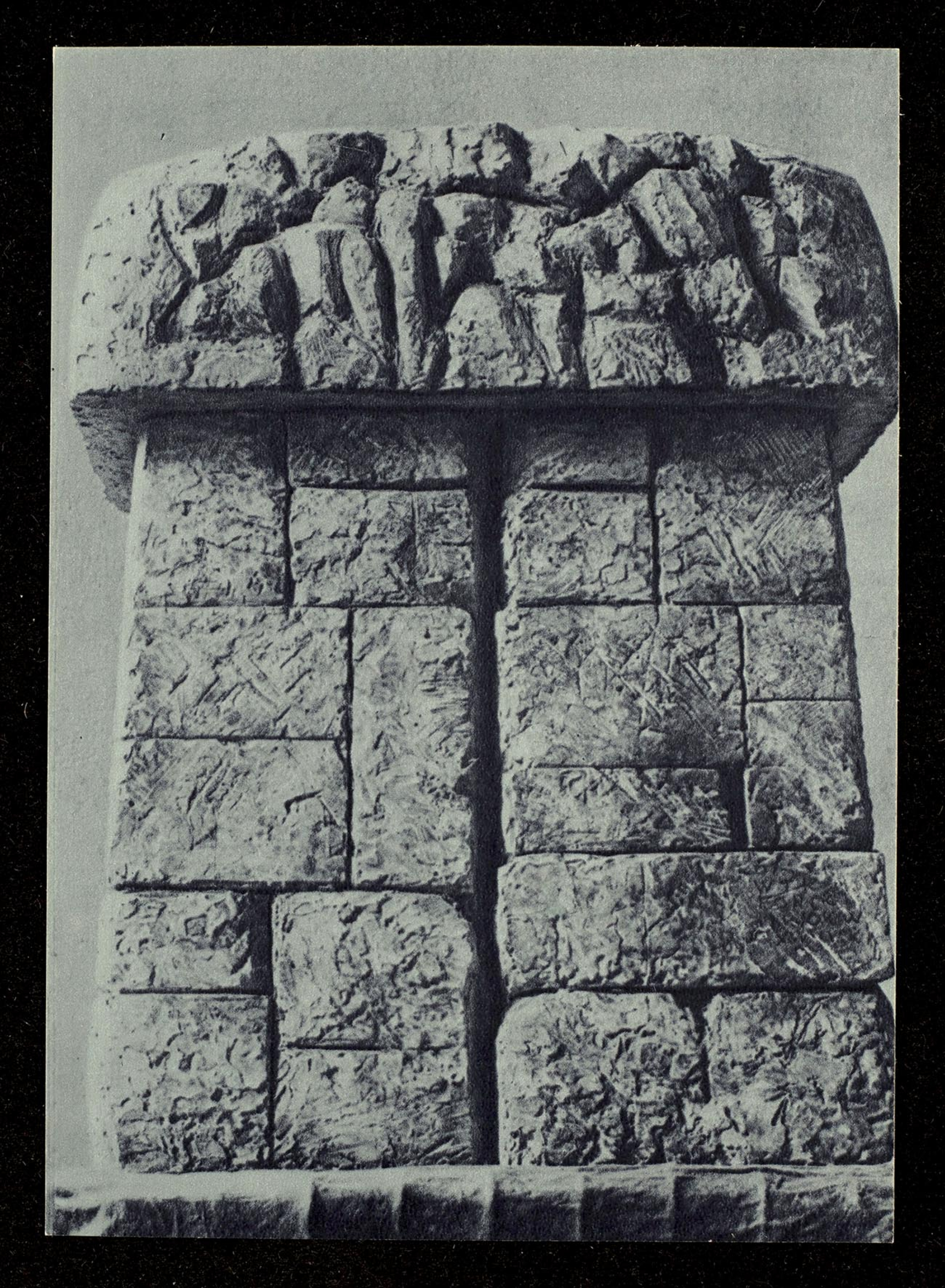
Elżbieta Janicka focuses on the case of the former German Nazi death camp Treblinka, the place of murder and (un)rest of nearly one million Jews from several European countries, the majority from Poland. While keeping in mind that “Treblinka” is as an umbrella term for the forced labor camp Treblinka I (1941-1944), the extermination camp Treblinka II (1942-1943), and a railway station at Treblinka the village, Janicka examines symbolic topography, such as the symbols and narratives that are imprinted into these sites under the auspices of the Treblinka Museum. Regarding the unrestricted Polish bottom-up and top-down fight to “conquer the space” of the Holocaust and make it symbolically profitable for Poland, Janicka raises the question: Why doesn’t the present Polish strategy of “promoting Polish martyrdom upon the Jewish one” trigger an international scandal and condemnation?
Janicka argues that while Polish cultural institutions do not deny the Holocaust itself, they practice a form of denialism by obscuring the reality of Polish involvement in the Holocaust. This lecture fits into a broader debate about Polish public institutions that promote a counter-history of the Holocaust and have at their disposal extraordinary means of propaganda both within Poland and abroad.
About the Speaker

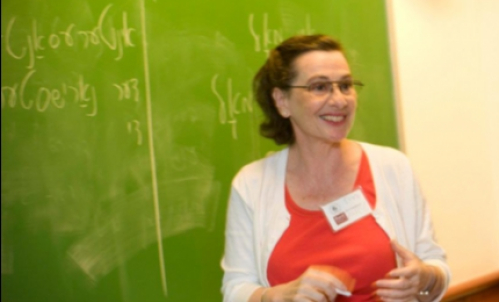
Elżbieta Janicka is a historian of literature, cultural anthropologist, and visual artist. She received her M.A. at the Université Paris VII Denis Diderot and her Ph.D. and postdoctoral degree at Warsaw University. Janicka is the author of Sztuka czy Naród? [Art or the Nation?] (Kraków: Universitas, 2006) and Festung Warschau [Forteress Warsaw] (Warszawa: Krytyka Polityczna, 2011). She co-authored Philo-Semitic Violence. Poland’s Jewish Past in New Polish Narratives (Lanham, MD: Rowman & Littlefield, 2021; with Tomasz Żukowski) and This Was Not America: A Wrangle Through Jewish-Polish-American History (Boston: Academic Studies Press, 2022; with Michael Steinlauf). Her individual exhibitions are: Ja, fotografia (1998); Miejsce nieparzyste [The Odd Place] (2006); and Inne Miasto [Other City] (2013, with Wojciech Wilczyk). Her research pertains to the identity and community building function of Polish antisemitism as well as the place and role of the Polish majority in the structure of the Holocaust. She works at the Institute of Slavic Studies of the Polish Academy of Sciences.